Powerful Acne Guide for Clearer, Safer Care
admin on 29 August, 2026 | No Comments

Introduction
Acne is searched by Sri Lankan shoppers who want a simple herbal cleansing option for acne-prone skin. Yet a product name alone cannot tell you whether a soap suits your skin, what its full ingredient list contains, or whether it can manage the type of acne you have. From my experience reviewing skincare content, the most useful approach is to check the label, test tolerance, cleanse gently, and keep realistic expectations.
Sri Lanka’s heat, humidity, commuting conditions, helmets, face coverings, hair oils and sweat can make a face feel greasy. However, acne is not simply “dirt.” Oil production, blocked follicles, inflammation, hormones, genetics, medicines and cosmetics can all play a part. Therefore, harsher washing is rarely the answer. A cleanser may remove surface oil and residue, but it does not automatically treat every cause of acne.
This guide explains how to evaluate the soap without inventing product claims. It also shows how to place it within a sensible routine, how to protect the skin barrier, and when to ask a pharmacist, doctor or dermatologist for help. Always follow the current pack label. If the label and online information differ, treat the pack and qualified professional advice as the safer reference.
Featured Definition
Acne is a common skin condition involving blocked and inflamed hair follicles. It can cause blackheads, whiteheads, papules, pustules, nodules and cysts. Gentle care supports control, while persistent, painful or scarring acne may require pharmacy or medical treatment.
Table of Contents
What Acne Can and Cannot Tell You
Acne is not one identical problem. It may be mainly comedonal, inflammatory, nodular or mixed. Severity, body site, scarring risk, pregnancy, medicines and skin sensitivity all influence the safest treatment plan.
Acne develops when oil production, follicular blockage, microbial activity and inflammation interact. Hormones, genetics, friction, occlusive products and some medicines can contribute. It is not caused simply by dirty skin.
Before buying, photograph or read the ingredient list and directions. Look for the manufacturer or importer, batch number, manufacture and expiry dates, net weight, contact details, warnings and storage instructions. If an ingredient list is incomplete or unreadable, ask the seller for a clear image. Avoid relying only on testimonials, before-and-after photos or claims such as “instant cure,” “100% safe,” or “works for everyone.”
Acne Basics: Why Cleansing Is Only One Part
Acne develops around the pilosebaceous unit: the hair follicle and its oil gland. Excess sebum, altered shedding of skin cells, follicle blockage, Cutibacterium acnes activity and inflammation interact in different proportions. Blackheads and whiteheads are clogged follicles. Papules and pustules are inflamed lesions. Nodules and cysts sit deeper and carry a higher risk of scarring.
The NHS acne guidance explains that acne is common, is not caused by poor hygiene, and may worsen when affected skin is washed too often. It recommends a mild soap or cleanser with lukewarm water and advises against squeezing spots. This matters because an aggressive “deep-clean” routine can leave skin tight, red and more reactive without fixing follicular blockage.
In Sri Lanka, humidity and sweating can change how a routine feels. A person may prefer a fresh rinse after travel or exercise. Still, repeated soaping through the day can strip the barrier. Usually, cleansing in the morning and evening—and after heavy sweating when necessary—is a better starting point than washing whenever oil appears. Blotting excess oil with clean tissue and choosing non-comedogenic products can reduce the urge to over-wash.

How Acne Fits into a Routine
Acne care has four aims: reduce new clogged follicles, control inflammation, protect the skin barrier and prevent scars. Cleansing supports the routine, while proven active treatments may influence blockage or inflammation.
If acne is mild, a pharmacist can help choose an over-the-counter plan. Persistent inflammatory acne, nodules, cysts or scars require medical assessment rather than repeated product switching.
People already using benzoyl peroxide, salicylic acid, adapalene, tretinoin, azelaic acid or prescription medicines should be especially cautious about adding another potentially active cleanser. Combining several drying products can cause irritation that resembles a breakout. A pharmacist or doctor can help sequence products so that treatment is effective without overwhelming the barrier.
How to Assess the Label, Quality and Authenticity
Sri Lanka’s National Medicines Regulatory Authority cosmetics information describes cosmetics as products mainly used to clean, perfume, protect or keep external body parts in good condition. It also explains that registration aims to support safety, proper labelling and ingredient oversight, and that supporting evidence is expected for label claims. This is useful context when evaluating any acne-positioned cleansing bar.
Do not write or repeat “NMRA approved” unless you have checked the current official record and the exact product identity. Registration information can change, and similarly named products may not be identical. Keep the package and receipt until you know the soap suits you. If the colour, fragrance, texture, packaging or seal seems inconsistent with a previous purchase, contact the seller or manufacturer before use.
Authenticity is also about the supply chain. Buy from a seller that provides a clear product description, contact details, delivery information and a reasonable return or complaint process. Avoid unpackaged bars, relabelled products, or listings that hide the ingredient panel. For product availability and current catalogue information, review the Wedaarana herbal skincare and wellness range. This is the only store link in this guide; check the live listing and pack label before deciding.
Seven-Step Trial Checklist for Acne
- Check the sealed pack. Confirm the product name, batch number, dates, manufacturer or importer, net weight and contact information. Do not use a damaged, leaking or unlabelled pack.
- Read every ingredient and warning. If you have known fragrance, essential-oil, botanical or preservative allergies, compare the list with products that previously caused a reaction.
- Patch test first. Lather a small amount and apply it to a limited area such as the side of the jaw. Rinse as directed. Observe the area over the next day or two before broader facial use.
- Start slowly. Use it once daily or on alternate days at first if your skin is sensitive. Keep the rest of the routine simple so you can identify the cause of any reaction.
- Use gentle technique. Wet the face with lukewarm water, lather the bar in clean hands, spread the foam lightly, then rinse well. Do not scrub with the bar, a brush or a rough towel.
- Moisturise and protect. Apply a light, fragrance-free, non-comedogenic moisturiser. During the day, use a sunscreen that suits acne-prone skin.
- Review after a consistent trial. Track comfort, redness, new inflamed lesions and dryness. Stop earlier if irritation appears. Do not continue for weeks merely because a marketing claim predicts delayed purging.

Skin Type Comparison: What to Watch
| Skin situation | Possible benefit | Main risk | Practical approach |
|---|---|---|---|
| Oily, resilient | Removes surface oil and sweat | Over-washing may trigger tightness | Begin once daily; increase only if comfortable |
| Dry or sensitive | May clean sunscreen or residue | Stinging, flaking and barrier damage | Patch test; consider a gentler non-soap cleanser |
| Combination | Useful on oilier zones | Dry cheeks may become irritated | Use lightly; moisturise dry areas |
| Inflamed acne | Cleans without picking lesions | Friction can worsen soreness | Lather in hands; no scrubbing |
| Nodules or cysts | Basic hygiene only | Delayed medical care and scarring | Seek professional treatment; cleanser is supportive |
| Using acne medicine | Prepares clean skin | Combined dryness and irritation | Ask how to alternate cleanser and treatment |
A Simple Morning and Evening Routine
Morning
- Cleanse gently with a mild product that suits your skin; do not scrub active acne.
- Apply a light moisturiser. Oily skin can still be dehydrated, and skipping moisturiser may make active treatments harder to tolerate.
- Use broad-spectrum sunscreen suitable for acne-prone skin. Sun protection helps reduce the contrast and persistence of post-acne dark marks.
- Choose non-comedogenic makeup or skincare where possible, and keep hair oils away from the forehead.
Evening
- Remove makeup and water-resistant sunscreen without harsh rubbing. If necessary, use a gentle first cleanse before the soap rather than repeating the bar several times.
- Cleanse once, rinse thoroughly and pat dry with a clean towel reserved for the face.
- Apply any acne medicine exactly as advised or labelled. Do not improvise a mixture of several strong actives.
- Finish with moisturiser if your skin feels dry or if your treatment plan recommends it.
This routine is deliberately simple. When the skin changes, adjust one variable at a time. Otherwise, it becomes difficult to know whether a new soap, sunscreen, cream, hair product, menstrual change or prescription is driving improvement or irritation.
Common Mistakes with Acne
Scrubbing the bar directly on pimples. Friction can rupture inflamed lesions and worsen redness. Make lather in your hands and use fingertips.
Washing five or six times a day. More cleansing does not remove hormonal or follicular causes. It can weaken the barrier and make treatment sting.
Expecting an overnight cure. Acne treatments usually need consistent time, while a cleanser mainly supports the routine. A sudden drying effect is not the same as lasting control.
Combining every “anti-acne” product. Soap, scrub, toner, acids and spot gels can create cumulative irritation. Introduce one product at a time.
Squeezing spots after cleansing. Freshly washed skin does not make extraction safe. Picking increases inflammation, marks and scarring risk.
Using the same bar for multiple people. Sharing may transfer residue and makes storage less hygienic. Keep the bar dry on a draining dish and use clean hands.
Ignoring the body sites. Chest and back acne may need a practical wash routine and professional treatment. Facial advice does not always transfer directly.
Assuming herbal means allergy-free. Botanical ingredients and fragrance components can irritate or sensitise. Natural origin does not guarantee universal safety.
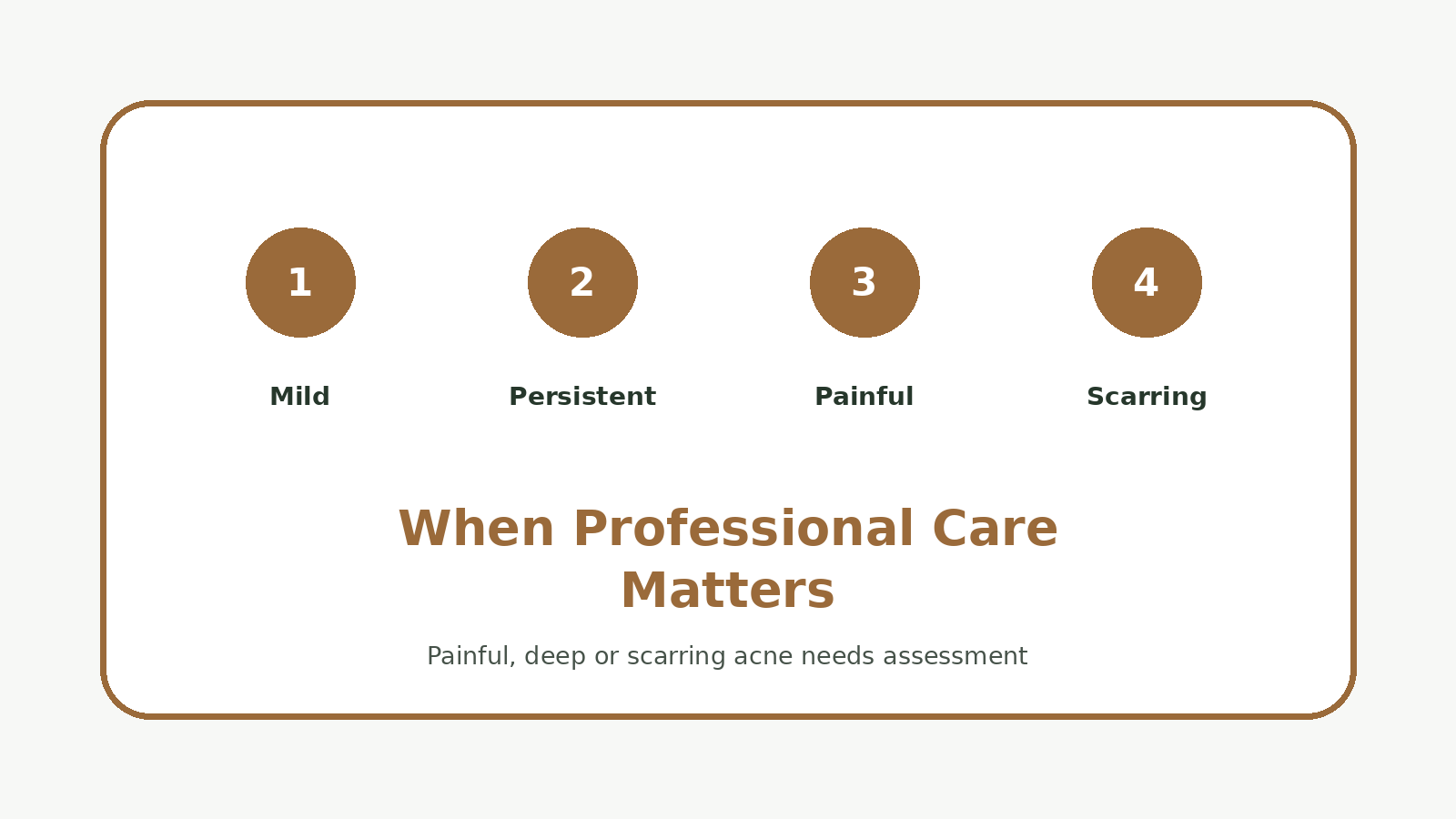
When Professional Acne Care Matters
The American Academy of Dermatology acne self-care advice emphasises gentle care, avoiding scrubbing and picking, and using products that are less likely to clog pores. A cleanser is a foundation, but moderate or severe acne often needs proven active treatment. Early care is important when scars are beginning.
Ask a pharmacist or doctor for advice when acne is persistent despite a sensible routine, when you are unsure how to combine products, or when a treatment causes significant dryness. Seek a dermatologist or appropriately qualified doctor for painful nodules, cysts, spreading inflammation, scarring, recurrent acne on the chest or back, or acne that affects confidence and mental wellbeing.
Pregnancy, breastfeeding, childhood, allergies and ongoing medicines can change which acne treatments are appropriate. Do not use someone else’s prescription. Also, do not stop prescribed medicines because an online article suggests a herbal alternative. A clinician can distinguish acne from folliculitis, rosacea, dermatitis and other conditions that may look similar.
People Also Ask
How should oily skin with Acne be cleansed?
It may help remove surface oil and sweat if the formula is well tolerated. However, oily skin can still become irritated, so begin gradually and reduce use if tightness, burning or flaking appears.
Can Acne be cured permanently?
A rinse-off cleanser should not be assumed to cure acne. It can support hygiene and a consistent routine, while persistent or inflamed acne may require evidence-based topical or prescription treatment.
How often should I use Acne?
Start once daily or on alternate days, especially if your skin is sensitive or you use acne medicine. If the skin remains comfortable, follow the pack directions without exceeding two gentle washes a day unless a clinician advises otherwise.
When should teenagers seek help for Acne?
Teenagers should check the label’s age guidance and patch test. A parent, pharmacist or doctor should help when acne is painful, widespread, scarring, or affecting wellbeing.
Should I use moisturiser with acne care?
Yes, a light non-comedogenic moisturiser can support the skin barrier and improve comfort. Choose a fragrance-free option if the skin is easily irritated.
Expert Q&A
How can I tell whether irritation is a breakout or “purging”?
A cleansing soap is not automatically expected to cause purging. Burning, itching, swelling, widespread tiny bumps or sharply increased redness suggest irritation or allergy; stop the product and obtain advice if symptoms persist.
Can product claims be transferred from a raw herb to a finished formula?
No. A rinse-off cosmetic, a raw plant, an extract and an oral preparation have different exposure, concentration and safety considerations. Do not transfer claims between them without product-specific evidence.
Can I combine Acne with benzoyl peroxide or adapalene?
Possibly, but the combination may be drying. Introduce the cleanser slowly, use moisturiser, and ask a pharmacist or doctor how to sequence products, particularly if you already have peeling or eczema.
What information should I record during a product trial?
Note the start date, frequency, other skincare, menstrual or medicine changes, dryness, itching, inflamed lesion count and photographs taken in similar lighting. This helps you judge patterns more fairly than memory alone.
What should I do if the product listing and package label disagree?
Pause use and ask the seller or manufacturer for clarification. Follow verified, current label instructions and regulator information; do not rely on a copied marketplace description or an old blog post.
Tracking Acne Progress Fairly
Assess acne over consistent intervals rather than checking the mirror many times each day. Count new inflamed lesions, note pain and record whether dark marks or scars are appearing. Photographs taken weekly in similar light can show trends that are difficult to notice from memory.
Progress does not always mean perfectly clear skin. Fewer painful lesions, faster healing and prevention of scars are meaningful outcomes. If a routine is tolerated but not improving acne after a reasonable treatment period, seek professional review instead of adding several untested products.
Conclusion
Acne can be evaluated as a cleansing product for acne-prone skin, not as a guaranteed cure. The safest approach is to verify the pack, read the ingredient list, patch test, use lukewarm water, avoid scrubbing, moisturise, protect the skin from sun and track tolerance. In Sri Lanka’s humid conditions, this measured routine is more useful than chasing an aggressively dry feeling.
Most importantly, match the response to the acne. A few mild spots may be managed with gentle self-care and pharmacy guidance. Painful nodules, cysts, scars or persistent breakouts deserve professional assessment. Review the current product information, keep expectations realistic, and choose a routine you can follow consistently without damaging the skin barrier.